If you’re staying in Agra and want to see more Mughal history beyond the Taj Mahal and Agra Fort, add Fatehpur Sikri to your itinerary.
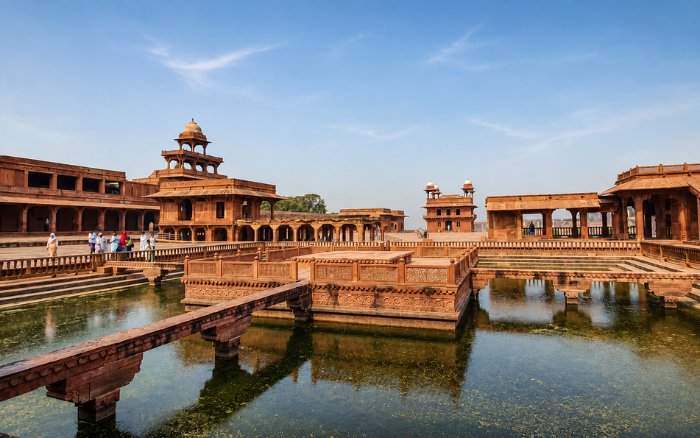
Located about 40 km from Agra, Fatehpur Sikri is a historic Mughal city developed under Emperor Akbar in the 16th century. Its red sandstone buildings, royal courtyards, mosque, palace complex, and tomb of Sheikh Salim Chishti make it an easy and worthwhile day trip from Agra.
This Fatehpur Sikri Day Trip Guide covers the main monuments, how to plan your visit, the best time to go, and practical tips for your trip.
Quick answer
You can visit Fatehpur Sikri from Agra in half a day.
Plan around 2 to 4 hours for the main monuments, depending on your interest in architecture, history, and photography.
The main sights include:
- Buland Darwaza
- Jama Masjid
- Tomb of Sheikh Salim Chishti
- Diwan-i-Khas
- Panch Mahal
- Jodha Bai’s Palace
Fatehpur Sikri has been a UNESCO World Heritage Site since 1986.
Why visit Fatehpur Sikri?
Emperor Akbar developed Fatehpur Sikri between 1571 and 1573, and the city became the Mughal imperial capital.
The capital was later moved to Lahore in 1585. Fatehpur Sikri’s surviving buildings provide a close look at the architecture and planning of Akbar’s period.
The city is closely connected with Sheikh Salim Chishti, a Sufi saint whose presence at Sikri is part of the site’s history.
Today, you can walk through the former royal complex and see religious buildings, audience halls, palaces, courtyards, and residential structures within a compact historic area.
For travelers staying in Agra, the location makes Fatehpur Sikri a practical addition to a Golden Triangle itinerary.
Best places to see in Fatehpur Sikri
Buland Darwaza
Buland Darwaza is the monumental gateway associated with Jama Masjid.
Its enormous scale and red sandstone construction make it one of the most recognizable structures at Fatehpur Sikri. Take a moment to examine the inscriptions and architectural details around the gateway.
Jama Masjid
Jama Masjid is one of the main religious buildings in the complex.
Its large courtyard gives you a sense of the scale of the former Mughal city. The mosque is also connected with the tomb complex of Sheikh Salim Chishti.
Visitors should follow the site’s instructions and dress respectfully around religious areas.
Tomb of Sheikh Salim Chishti
The white marble tomb of Sheikh Salim Chishti contrasts strongly with the red sandstone buildings around it.
Akbar’s association with the saint is an important part of Fatehpur Sikri’s history. The tomb remains an active religious site, so visitors should be respectful and follow local rules.
Diwan-i-Khas
Diwan-i-Khas is known for its distinctive central pillar and carved stonework.
The building is traditionally associated with imperial meetings and discussions during Akbar’s reign. Its unusual interior design makes it one of the most interesting structures to photograph.
Panch Mahal
Panch Mahal is a five-storey pavilion with an open design.
Each level becomes smaller toward the top, giving the building its distinctive appearance. Its architecture is best appreciated from different angles as you walk around the complex.
Jodha Bai’s Palace
Jodha Bai’s Palace is one of the largest residential buildings within Fatehpur Sikri.
The structure has a large courtyard and detailed stonework. You’ll see architectural elements associated with different regional traditions.
Some historical references also use the name Mariam-uz-Zamani in connection with Jodha Bai, so naming can vary between sources.
How to plan a Fatehpur Sikri day trip from Agra
Fatehpur Sikri is around 40 km from Agra by road.
Leave Agra in the morning so you have enough time for sightseeing before the afternoon heat becomes uncomfortable, particularly during the hotter months.
A private car with a driver is convenient if you’re travelling with family or want to combine Fatehpur Sikri with other Agra attractions.
Allow around 2 to 4 hours for the main complex. History enthusiasts and photographers may want longer.
After sightseeing, return to Agra for lunch and continue your Agra itinerary.
Suggested itinerary
8:00 AM: Leave Agra
9:30 AM: Arrive at Fatehpur Sikri
9:30 AM to 12:30 PM: Explore Buland Darwaza, Jama Masjid, Tomb of Sheikh Salim Chishti, Diwan-i-Khas, Panch Mahal, and Jodha Bai’s Palace
12:30 PM: Leave Fatehpur Sikri
2:00 PM: Return to Agra for lunch
Afternoon: Continue Agra sightseeing or return to your hotel
Travel times can change depending on traffic, weather, and your starting location.
Best time to visit Fatehpur Sikri
The cooler months from October to March are generally more comfortable for walking around the historic complex.
April to June can be very hot, especially around midday. If you’re travelling during summer, an early start is a smart choice.
The monsoon season can bring rain and humidity, so check the weather forecast before your trip.
If you plan to visit during a busy holiday period, allow additional time for traffic and crowds.
What to wear and carry
You’ll be walking across courtyards and between several monuments, so comfortable footwear is useful.
Carry:
- Drinking water
- Sunglasses
- Sunscreen
- Hat or cap
- Phone or camera
- Some cash
Fatehpur Sikri includes religious spaces, so dress respectfully and follow instructions at Jama Masjid and the Tomb of Sheikh Salim Chishti.
Before visiting, check the latest Archaeological Survey of India (ASI) information for entry rules, timings, ticket details, and visitor restrictions.
Is Fatehpur Sikri worth visiting?
Yes, especially if you’re already in Agra.
The site brings several important Mughal-era structures together in one historic complex. You can see grand gateways, royal buildings, audience halls, religious architecture, and detailed stonework within a few hours.
It’s particularly useful for travelers who want more history between Agra and Jaipur.
If you’re planning a Golden Triangle trip, you can visit Fatehpur Sikri from Agra or include it as a stop while travelling toward Jaipur.
Add Fatehpur Sikri to your Agra itinerary
A Fatehpur Sikri Day Trip Guide is useful when you’re planning your Agra sightseeing schedule, but you don’t need a full extra day for the main complex.
If you’re arranging a private Golden Triangle holiday, Book Luxury Golden Triangle Tour can help organize private transportation, hotels, guides, and customized Delhi, Agra, and Jaipur itineraries.
Call / WhatsApp: +91 93190 02744
Website: Book Luxury Golden Triangle Tour
Plan your Agra and Fatehpur Sikri visit around your travel dates and preferred sightseeing pace.
Frequently Asked Questions
Q1. How far is Fatehpur Sikri from Agra?
Fatehpur Sikri is approximately 40 km from Agra. The road journey generally takes around 1 to 1.5 hours, depending on traffic and your starting point.
Q2. How much time do I need at Fatehpur Sikri?
Around 2 to 4 hours is a practical amount of time for the main monuments. You can stay longer if you’re interested in detailed architecture or photography.
Q3. Can I visit Fatehpur Sikri and Agra in one day?
Yes. You can visit Fatehpur Sikri in the morning and return to Agra for lunch and afternoon sightseeing.
Q4. What are the main attractions at Fatehpur Sikri?
The main sights include Buland Darwaza, Jama Masjid, Tomb of Sheikh Salim Chishti, Diwan-i-Khas, Panch Mahal, and Jodha Bai’s Palace.
Q5. Is Fatehpur Sikri worth visiting on a Golden Triangle tour?
Yes. Fatehpur Sikri fits well into a Delhi, Agra, and Jaipur itinerary and gives you the chance to see more Mughal architecture beyond Agra’s most famous monuments.
Official sources
For factual information, entry rules, timings, and current visitor information, check:
- UNESCO World Heritage Centre: Fatehpur Sikri
- Archaeological Survey of India, Agra Circle: Fatehpur Sikri